How do you decide between repair, restoration, and replacement?
By the condition of the field and the insulation under it. A firm roof with a handful of failures gets repaired. One aging evenly over dry insulation is a restoration candidate, with repairs done first.
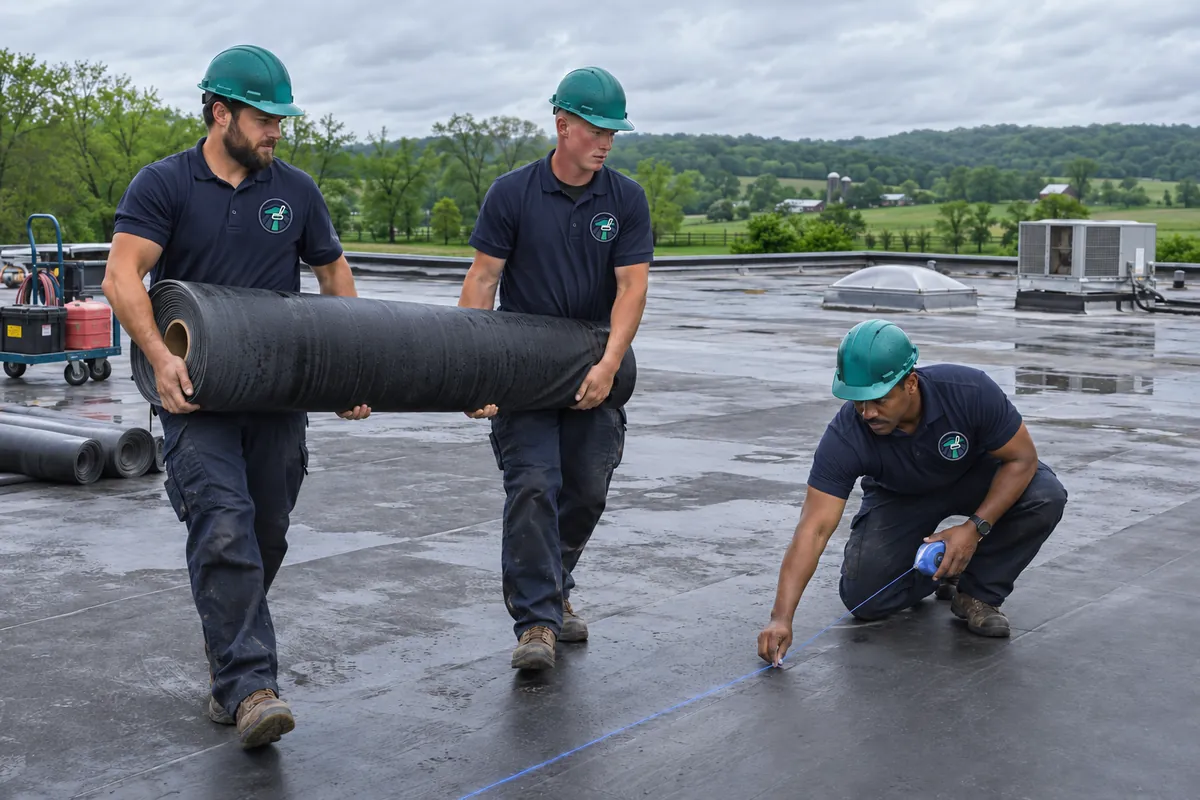
Widespread wet insulation, brittle or shrunk membrane, or rust-through panels call for tear-off or a recover, since patching over wet board locks the water in.
How does a temporary patch differ from a permanent repair?
A temporary patch slows water until conditions allow proper work; a permanent repair rebuilds the failed detail with matching materials.
Temporary work uses roof cement, wet-patch mastic, tape, or tarps, often on a damp surface, and gets removed later. Permanent work is cleaned, dried, and primed to the system's specs and lasts with the surrounding roof.
What happens during a commercial roof leak inspection?
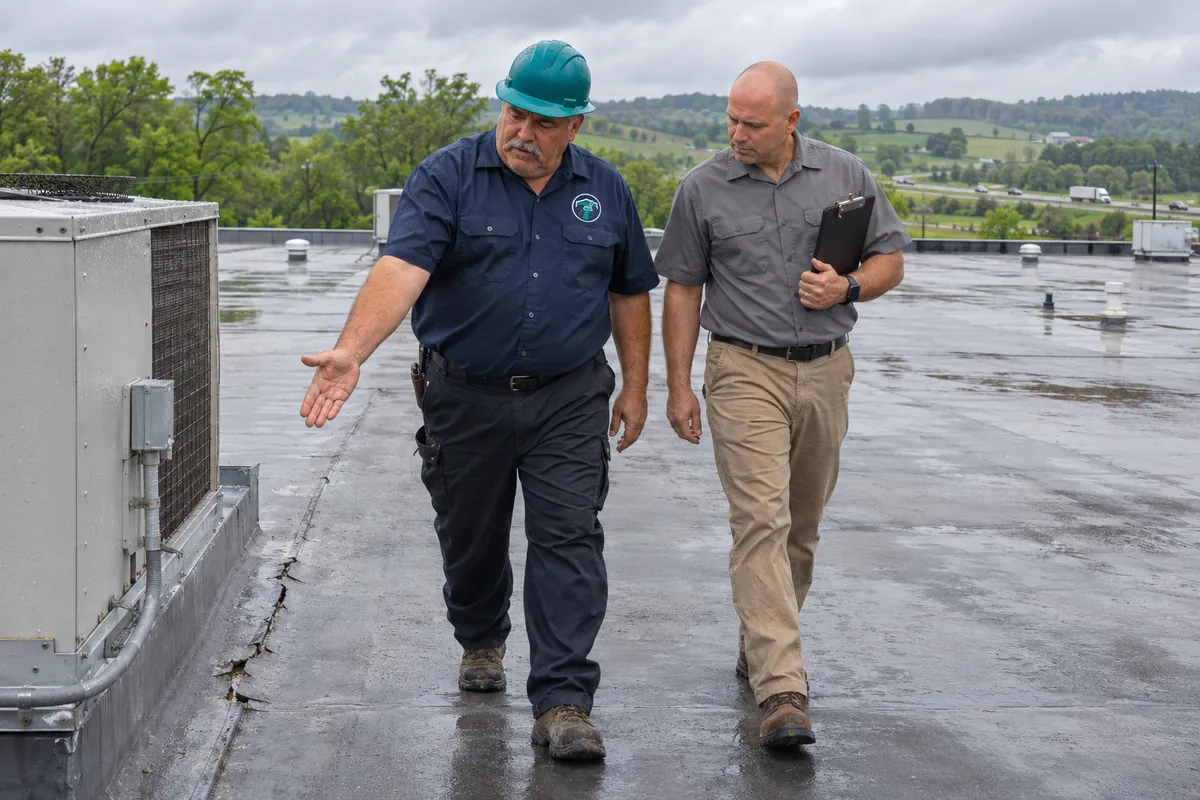
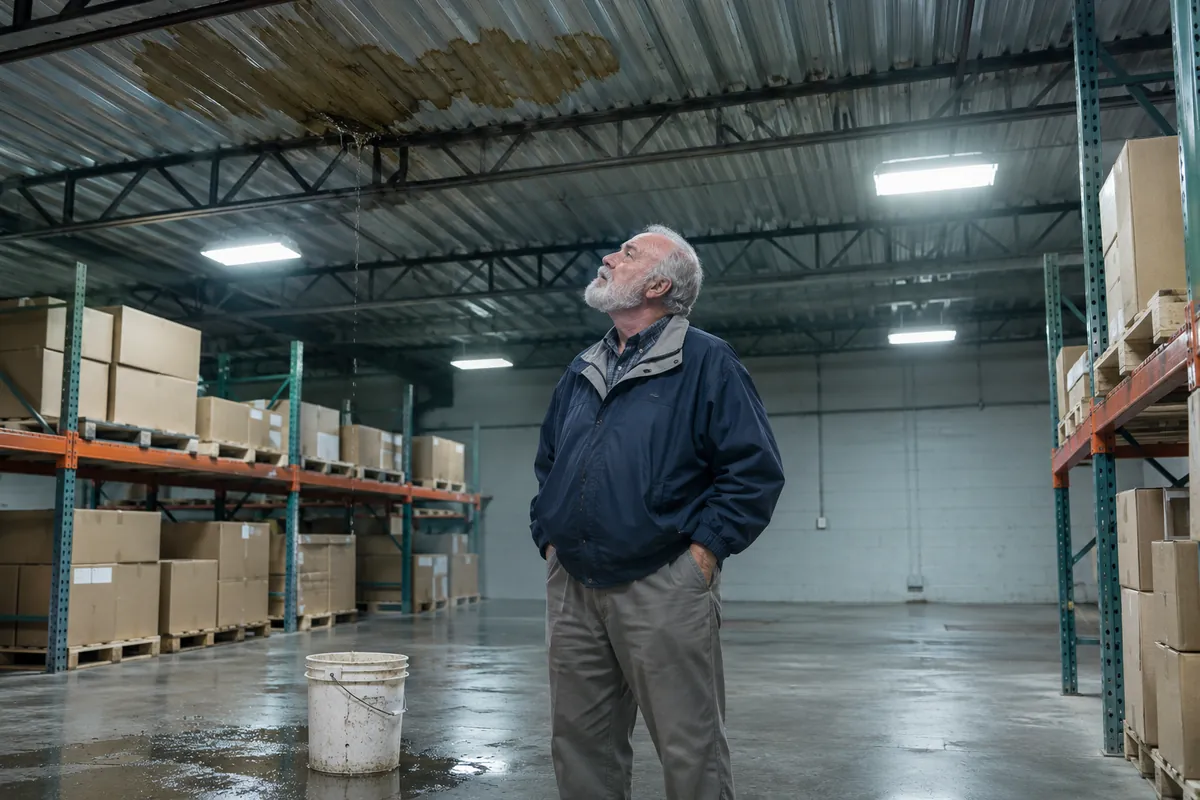
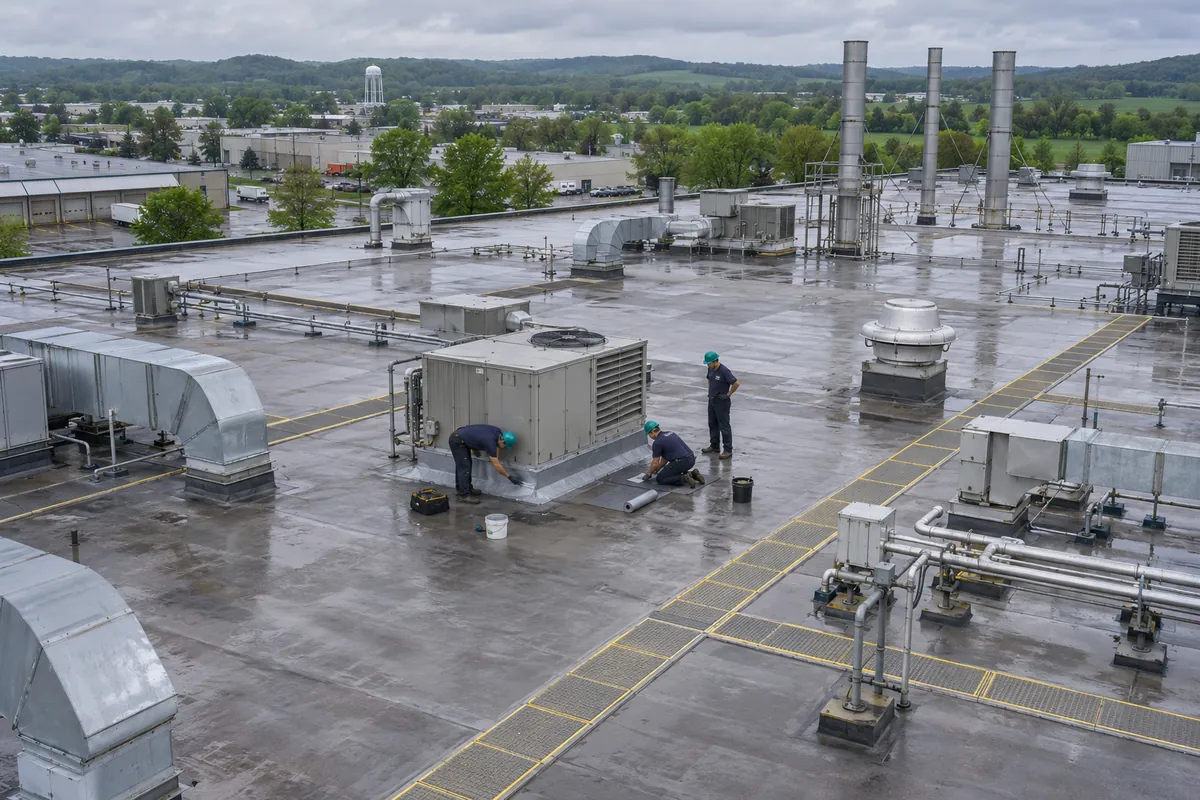
The inspector walks the roof over and upslope from each reported leak, probing seams, testing fasteners, and checking flashing, drains, and penetrations for punctures, blisters, and ponding. Moisture readings or core cuts show whether insulation is wet.
Photos tie each finding to a spot on a roof plan, labeled as a repair, a temporary fix, or a restoration sign, and we walk you through the list.
Do you repair roofs on churches and schools?
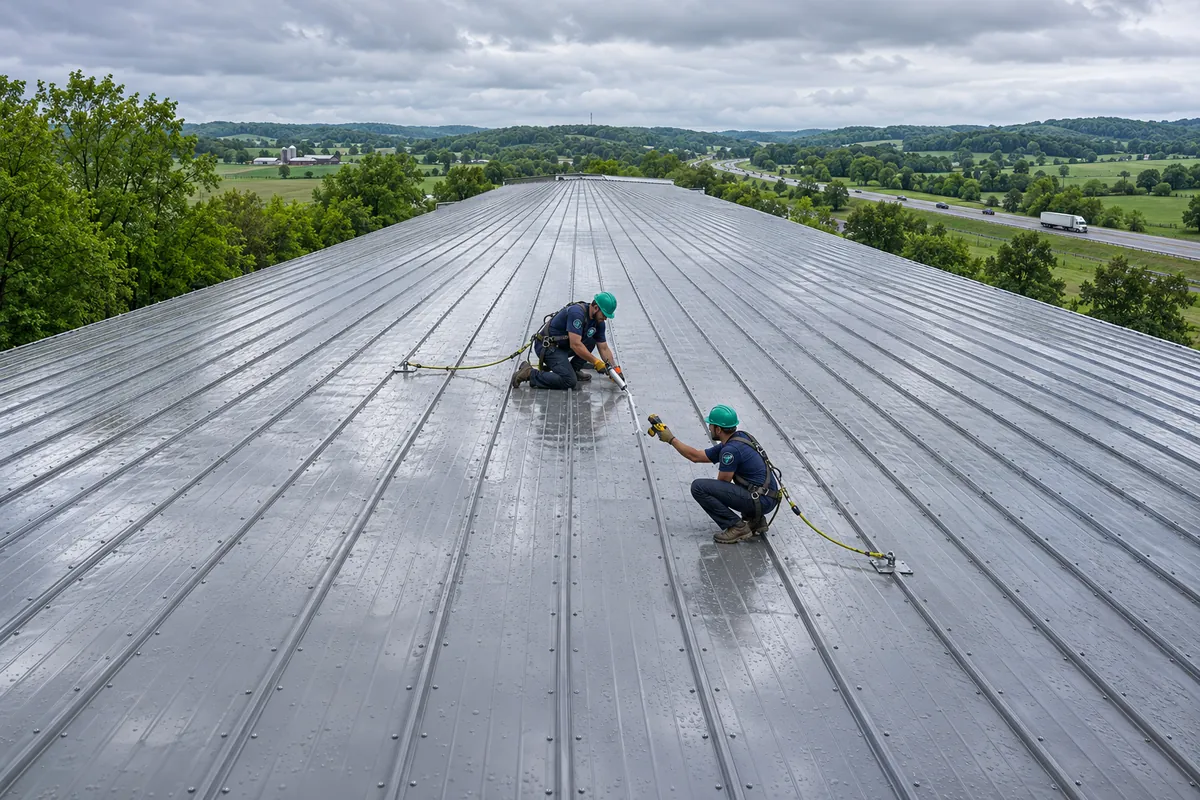
We do. Church, school, and other assembly buildings get the same roof walk and repairs as warehouses, with the work scheduled around services, classes, and events. Low-slope wings usually carry single-ply or built-up membrane, while fellowship halls and gyms often have metal roofs, so the visit covers each section on its own terms.
Can repairs be done while tenants or staff are in the building?
In most cases, yes. Work is staged one section at a time, noisy or smelly steps are timed for off hours when needed, and units are shut down only with notice. Interior protection goes under any opening above occupied space, and every seam opened during the day is closed before the crew leaves.
Can you match an older membrane or metal panel?
Usually, by measuring and testing on site. For metal, the rib profile and gauge are measured so a replacement panel lines up with the existing ribs and laps.
For single-ply, a cleaned test area shows whether old TPO or PVC will still take a weld; when it will not, a primed patch or a cover strip bonds it instead.
Do you handle repairs for owners with several buildings?
Yes. Property managers with a few buildings, or one site with several roofs, get each roof walked and recorded on its own plan, with findings sorted by urgency.
That lets the worst leaks go first and the rest get grouped into one visit, which saves lift and setup time when the roofs share a parking lot.