Seam Reweld Or Retape
Cleaning and rewelding a TPO or PVC lap, or priming and taping an EPDM lap, when the failure stays along one seam run and the sheet beside it is still flexible.

As a Bowling Green flat roof repair contractor, we fix open seams, punctures, blisters, ponding, and loose base flashing with materials that match your membrane.
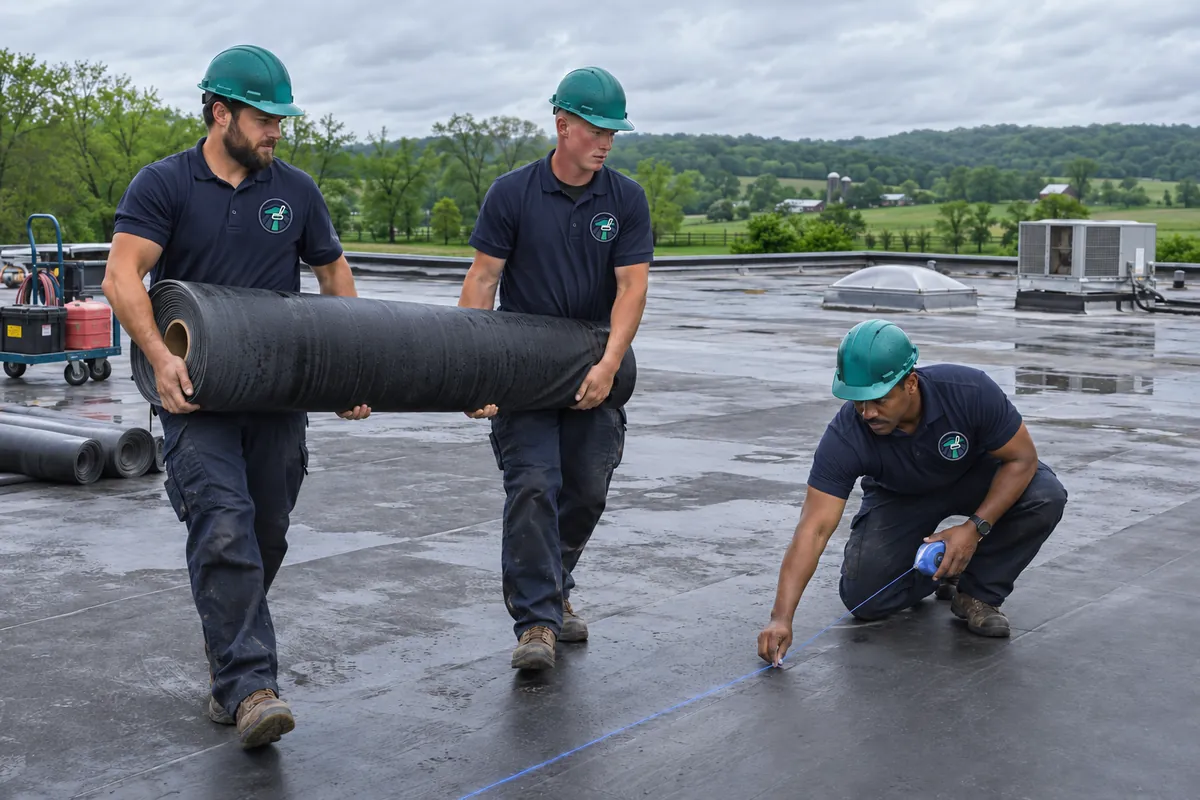
A Bowling Green flat roof repair contractor can fix a membrane that is still flexible and mostly dry. Here is how to tell which side your roof sits on.
Each row pairs what you notice with the failure behind it and the repair that matches your sheet.
Weathered seam edges that lost their weld, often at T-joints where three sheets meet.
We scrub the lap with membrane cleaner, reweld it with hot air, and probe the rest of the seam line.
Old adhesive and talc under the tape, plus shrinkage pulling at the laps near parapets.
Laps are cleaned to bare rubber, primed, and covered with new seam tape or a cover strip.
Debris over the strainer, a drain set high, or a deck that sags between joists.
Strainers are cleared, high drains lowered or sumped, and crickets built behind curbs that dam the water.
Moisture or air trapped between plies that expands in the sun and lifts the cap sheet.
Cracked or growing blisters are cut, dried, re-adhered, and patched; small firm ones get marked and watched.
Base flashing pulled off as the sheet shrank, or open coping joints feeding water inside the wall.
New base flashing, a reset termination bar, coping joint covers, and fresh sealant at the counterflashing.
Four ways a flat roof repair can go, from a spot patch to a section rebuild.
Cleaning and rewelding a TPO or PVC lap, or priming and taping an EPDM lap, when the failure stays along one seam run and the sheet beside it is still flexible.
A patch of the same sheet, welded or primed and rolled, with rounded corners, over a puncture, a cut blister, or a scuffed spot near the hatch. Wet insulation under it comes out first.
New base flashing at parapets and curbs, termination bars reset, coping joint covers added, and counterflashing resealed where water was getting behind the membrane.
Cleared strainers, lowered or sumped drains, tapered saddles behind units, and overflow scuppers through the parapet when a pond keeps forming in one place.
How a flat roof reads before and after the failed details are fixed.
Note which bay or unit the drip sits under.
Seams lifting or water ponding after storms? Send the address and we will set up a roof walk.
Get A Free EstimateThe membrane on your roof decides the materials; the order stays the same.
Identify the sheet first: TPO, EPDM, PVC, modified bitumen, or built-up. Then we probe seams near the leak, check flashing heights, and take moisture readings around each suspect spot.
Wet insulation under a puncture or blister is cut out and replaced with matching board, and the surrounding membrane is cleaned until it shows bare, firm sheet.
TPO and PVC patches are hot-air welded, EPDM gets primer and peel-and-stick, and mod bit gets a cut-in cap sheet. Every edge is probed or rolled before moving on.
Drains get cleared, tools and screws are swept off the field, and you get photos of each repair marked on a simple roof plan.
Flat roofs often share a building with metal sections, plant equipment, or a leak that needs tracing.
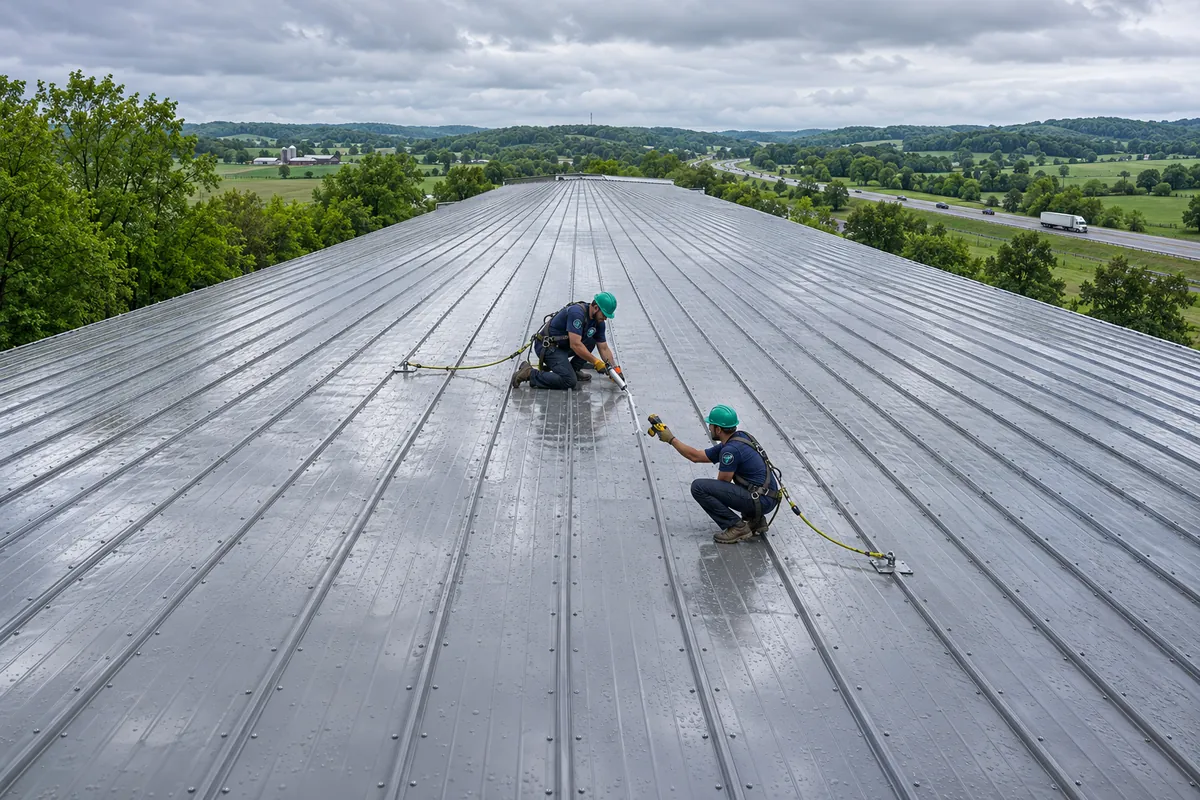
A metal shop or canopy beside the flat roof? Backed-out screws, end laps, and rusted panels get fixed with matching profiles.
Commercial metal roof repair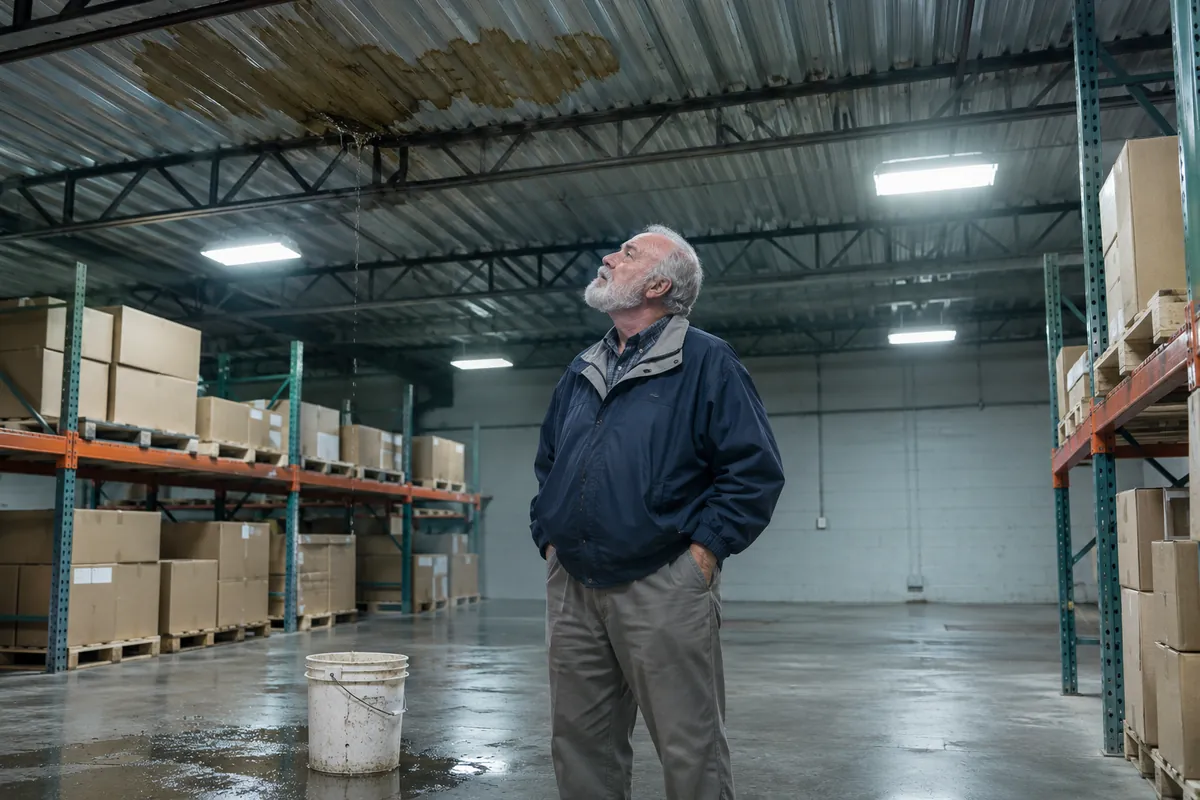
When the stain inside lines up with no seam you can see, leak tracing finds the entry point before anything gets cut.
Commercial roof leak repair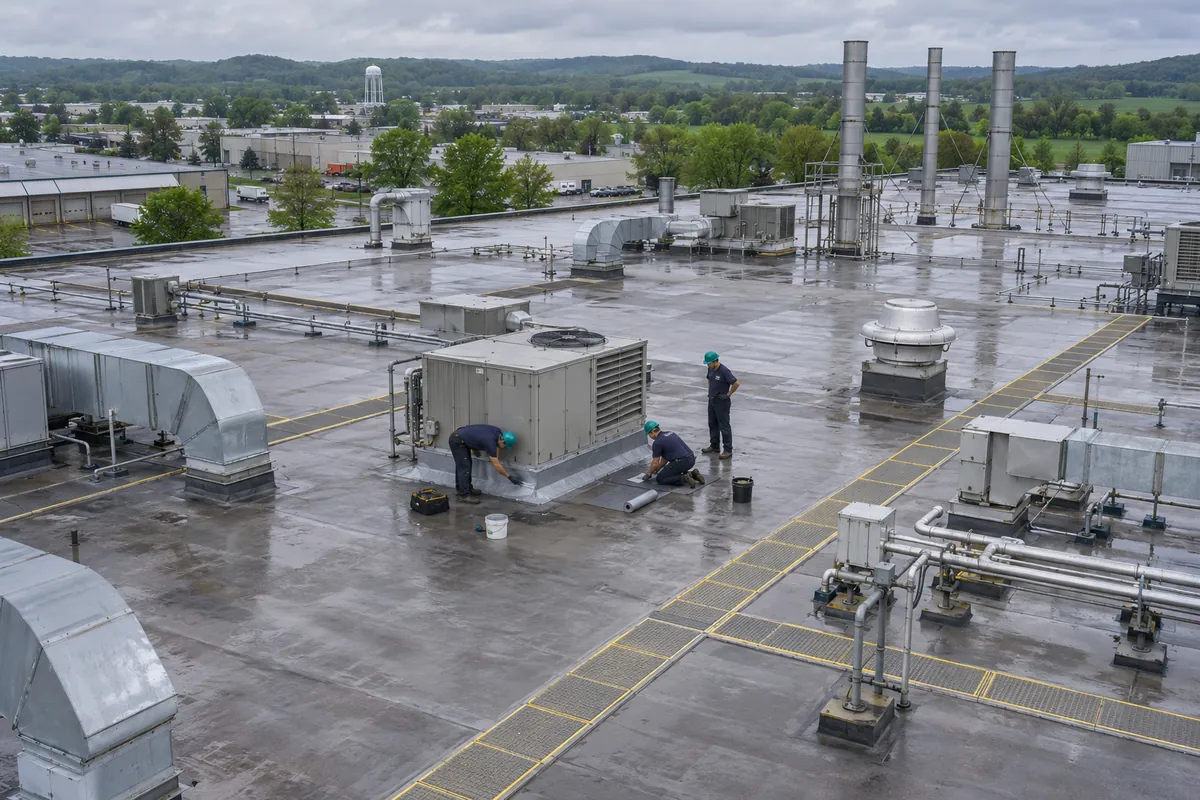
Plant roofs with exhaust fans and long service routes get repairs staged around production and shutdown windows.
Industrial roof repairIt follows the sheet. A TPO lap gets scrubbed with membrane cleaner so hot air can fuse it, then rewelded or covered with a welded patch.
An EPDM lap gets old adhesive and talc removed, primer, and seam tape or a cover strip. A probe along the rest of the seam shows whether one spot failed or the whole lap is going.
Cut it out when it is cracked, growing, or sitting in a walk path. Blisters form when trapped moisture or air expands in the sun and lifts the felts or the membrane.
Small firm ones with intact surfaces get marked and watched. A cluster across the field points to wet insulation, so a core cut or moisture scan comes before any repair plan.
Get the water to a drain. That starts with clearing strainers and scuppers, then lowering a high drain or adding a sump, building saddles behind units, or cutting an overflow scupper through the parapet.
Water that returns to the same spot after every rain points to slope or deck sag, so the deck under it gets checked too.
Each sheet gets its own patch. TPO and PVC take a hot-air welded patch with rounded corners, EPDM takes a primed peel-and-stick patch rolled tight, modified bitumen takes a cut-in cap sheet, and built-up roofs get layered felts and bitumen with the gravel put back.
Wet insulation under the hole is replaced before the patch goes down.
That is where the sheet turns up the wall and takes the most movement and sun. Base flashing pulls away as the membrane shrinks, termination bars loosen, and counterflashing caulk dries out. Open coping joints also let water run down inside the wall, and rusted curb caps let rain in behind unit flashing.
Tell us the membrane type if you know it, and where the water shows up inside.
Leave a name and number and we will call about your roof.
Or call (364) 207-8996 now.