Visual Trace
Checking seams, flashing, fasteners, and penetrations above and upslope of the stain, the fastest path when the entry point shows on the surface.

As a Bowling Green commercial roof leak repair contractor, we trace water from the stain inside to its entry point, then repair the seam, curb, or drain behind it.

A Bowling Green commercial roof leak repair contractor can fix most single-source leaks in one visit once the entry point is found. Some signs point to a wider problem.
Inside clues and the roof details they usually point to.
Water riding a steel deck flute across a bay from a curb, boot, or parapet several feet away.
We map stains on a floor plan, line them up with drains, curbs, and walls, then check upslope.
Conduit, sprinkler lines, or ductwork carrying the water sideways before it falls.
The run gets traced back along the pipe or duct to where it passes under a roof penetration.
Open curb corners, rusted curb caps, loose access panels, or a condensate line draining onto the membrane.
Curb flashing is reset, caps replaced, and condensate lines routed to a drain.
A pitch pan whose filler shrank away from the pipes it surrounds.
The pan is refilled short term, or replaced with a boot or a sealed curb with a cover.
Punctures from debris, bruised membrane, or lifted edges at the corners.
Storm damage gets photographed with dates, then patched and refastened before the next rain.
The tracing method depends on how clear the clues are; the repair follows the roof system.
Checking seams, flashing, fasteners, and penetrations above and upslope of the stain, the fastest path when the entry point shows on the surface.
Meter readings, core cuts, and infrared scans after sunset, when wet insulation holds heat, to map how far the water spread under the membrane.
Running water on one roof section at a time while someone watches inside, used when two or three suspects sit close together.
Mastic or tape to slow an active leak in wet weather, followed by a welded patch, new flashing, or new fasteners once the roof is dry.
The difference a found source makes inside the building.
Write down where and when it drips.
Old stain, or a leak that keeps coming back? Send the address for a free estimate.
Get A Free EstimateTracing comes before cutting, every time.
Inside first: the stain, the drip, and what runs overhead. Then we walk the roof above and upslope, checking seams, flashing, fasteners, and penetrations near that line.
Moisture meters, core cuts, and infrared after sunset show where insulation is wet. Close suspects get water-tested one section at a time while someone watches inside.
Every suspect spot is marked and photographed, then repaired with materials matched to the roof: welded patches, new flashing, reset curbs, or new fasteners.
After the repair, the next rain is the real test. We check back with you, and any stain that keeps growing gets traced again from where it is.
Once the source is found, the fix belongs to the roof system it sits on.
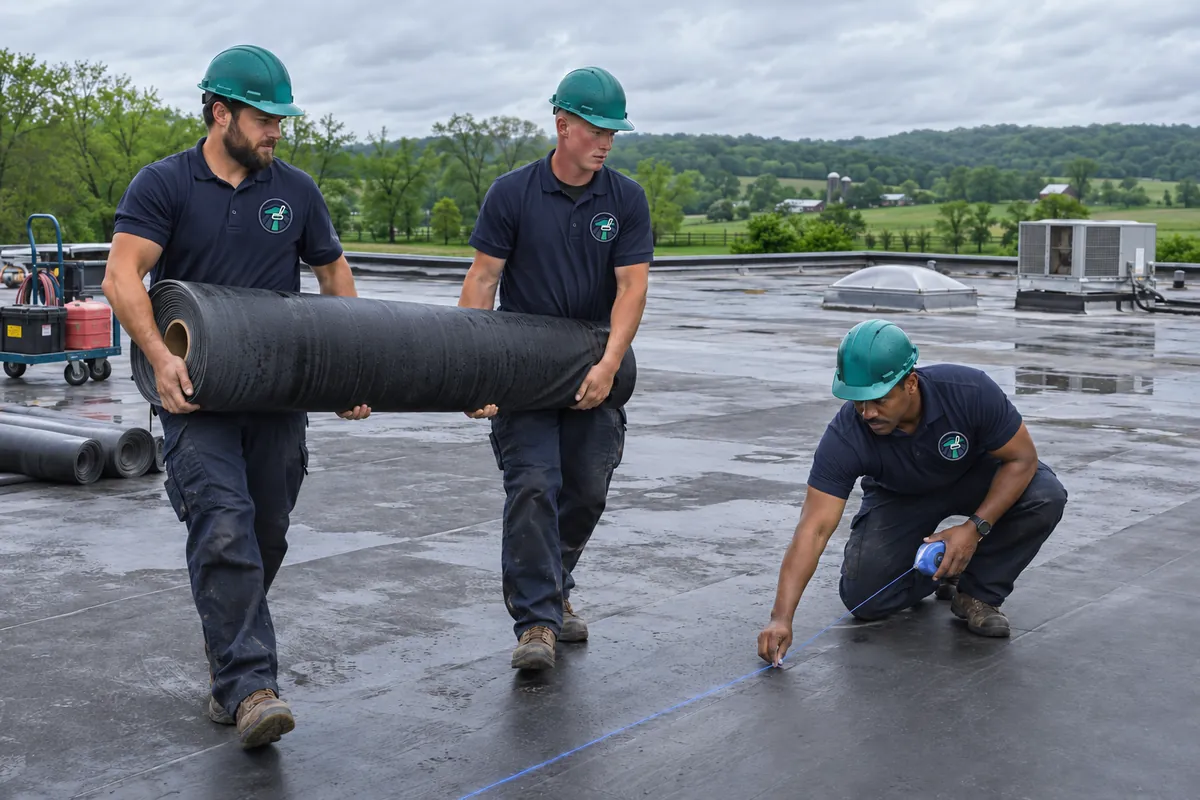
When the source turns out to be a lifted TPO lap or a punctured EPDM sheet, the fix follows that membrane's patch method.
Flat roof repair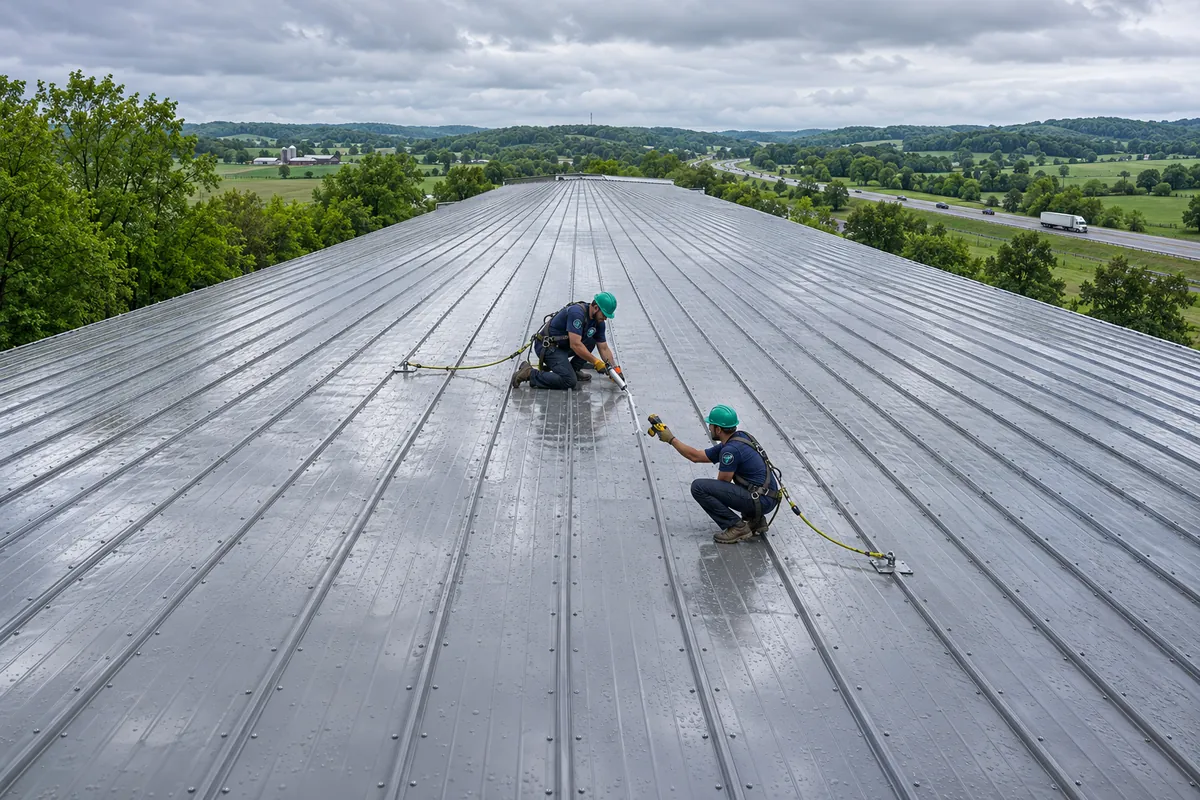
Leaks traced to screw rows, end laps, or ridge caps on a metal building get fastener and lap repairs.
Commercial metal roof repair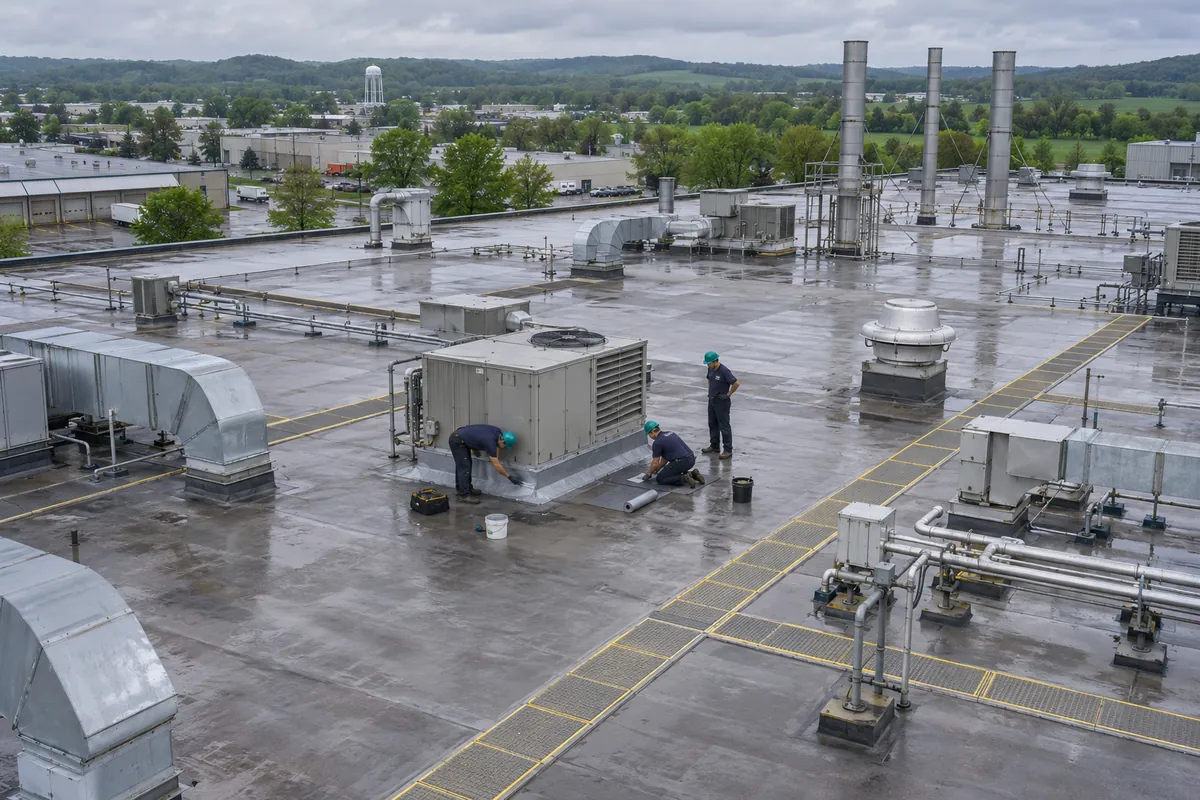
Large plant roofs with many units get infrared surveys and repairs staged around production.
Industrial roof repairStart inside at the stain, then move to the roof directly above and upslope. Water travels along the deck, insulation, and purlins before it shows, so the entry is often several feet away.
We use visual checks of nearby seams and flashing, moisture meters and core cuts, infrared scans after sunset, and controlled water tests, marking and photographing each suspect spot.
Because water runs along deck flutes, purlins, or the top of the insulation until it finds a joint or a low spot.
On a steel deck it can follow one flute across a whole bay, so a stain mid-warehouse can start at a curb or parapet. Light fixtures, sprinkler pipes, and ducts carry it sideways too.
The first places to check change with the system.
TPO and PVC leak at seam edges, T-joints, pipe boots, and curb corners; EPDM at seam tape, parapet shrinkage, and boots; modified bitumen at lap edges and blisters; built-up roofs at splits and pitch pans; metal roofs at screws, end laps, ridge caps, and gutters. Rooftop units add leak points on every roof.
Yes. The filler inside shrinks and pulls away from the pipe or support, and water runs down the gap. Refilling with fresh pourable sealer after cleaning out the old filler buys time.
The longer fix swaps the pan for a pre-formed boot, a sealed curb, or a pipe support that sits on the membrane, and groups crowded conduit under one covered curb.
Stay off the roof and work inside. Move or cover inventory, electronics, and machinery under the drip, set out buckets, and keep walkways dry.
Mark the drip on a floor plan with the date and time, check that drains visible from the ground are flowing, and photograph stains as they grow. Those notes help match the leak to a seam, curb, or drain later.
Tell us where the stain is, when it drips, and what sits on the roof above it.
Leave a name and number and we will call about your roof.
Or call (364) 207-8996 now.