Fastener Replacement
Snugging loose screws, upsizing stripped ones, and putting in new fasteners with fresh washers wherever the old washers have cracked, row by row along every purlin line.
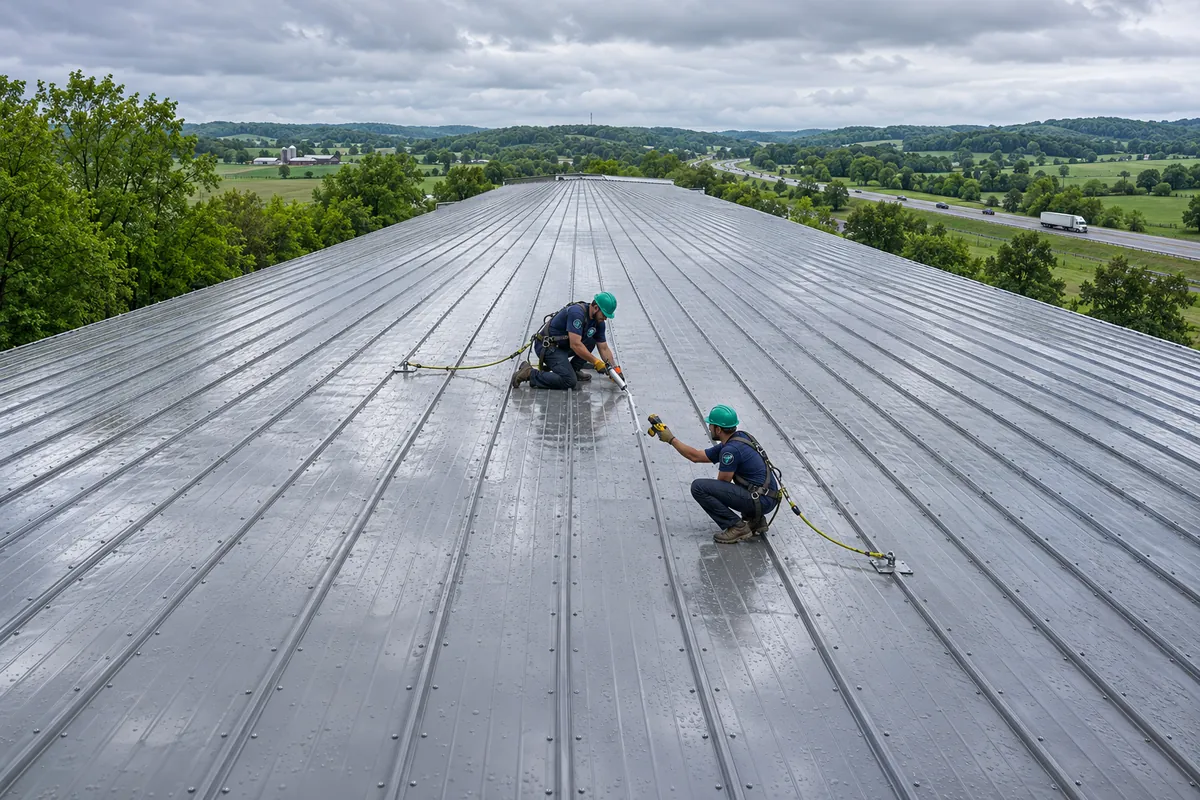
As a Bowling Green commercial metal roof repair contractor, we tighten or replace fasteners, reseal end laps, and swap rusted panels on shops, warehouses, and plants.
A Bowling Green commercial metal roof repair contractor can fix a roof whose steel is still firm and whose leaks trace back to screws, laps, and trim.
Metal roofs leak in predictable places. These are the ones we check first on every visit.
Daily expansion and contraction working the screws loose and widening their holes over the years.
Loose screws get snugged; stripped ones are replaced with a larger diameter that grips fresh metal.
Sealant tape that has dried out where one panel overlaps the next, drawing water in.
We lift the upper panel, clean out the old tape, set new butyl, and stitch the lap with new screws.
Rust starting at cut edges, scratches, and around fasteners, worst along laps and the eave.
Small spots are wire-brushed, primed, and patched; rust-through panels are cut out and matched by profile and gauge.
Long panel runs dumping more water than an undersized gutter can carry, or open splice joints.
Splices and end caps are resealed, hangers replaced, and downspouts added where one outlet serves too long a run.
Cracked or brittle skylight panels and failed closures where they lap the steel ribs.
Skylight panels are replaced to match the rib profile and sealed at both laps.
Metal repairs range from one screw row to a run of new panels.
Snugging loose screws, upsizing stripped ones, and putting in new fasteners with fresh washers wherever the old washers have cracked, row by row along every purlin line.
Opening and retaping end laps where the panel can lift, or cleaning and covering them with a fabric-reinforced seam treatment where it stays fixed, plus ridge cap joints on the same line.
Cutting out rust-through or creased sheets and setting matching panels or skylight panels, after checking the purlins underneath for rust or bending.
Resealing splices and end caps, replacing bent hangers, refastening eave trim and closures, and adding downspouts on long runs.
What a metal roof looks like before and after the leak points are dealt with.
Note the screw row or lap the drip lines up with.
Rust, loose trim, or a lap that stains every storm? Send the address for a free estimate.
Get A Free EstimateMetal repairs follow the panel layout, from the ridge down to the eave.
Walking each fastener line from ridge to eave, we test screws, look at washers, open suspect end laps, and measure the panel profile and gauge for any replacement sheet.
Loose screws are snugged and stripped ones upsized. Laps get new butyl tape and stitch screws, and ridge cap joints and closures on the same line are resealed.
Panels with rust-through are cut out after the purlins underneath are checked, and new sheets matching the ribs are lapped and fastened in the old pattern.
Hangers, splices, end caps, and outlets get repaired last, and the eave trim is refastened so the next heavy rain stays in the gutter.
Metal buildings often carry flat wings, plant equipment, or leaks that wander.
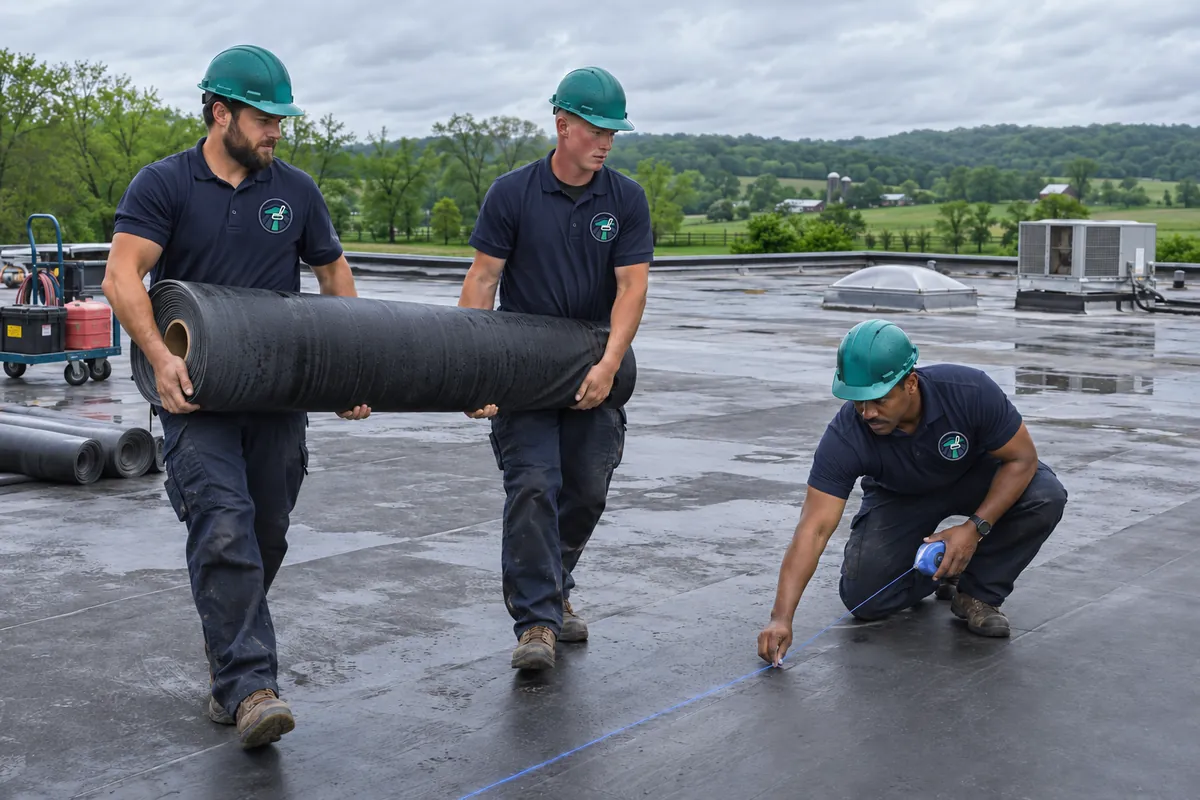
Flat sections, office wings, or canopies tied into the metal building get seams rewelded and base flashing reset where the two roofs meet.
Flat roof repair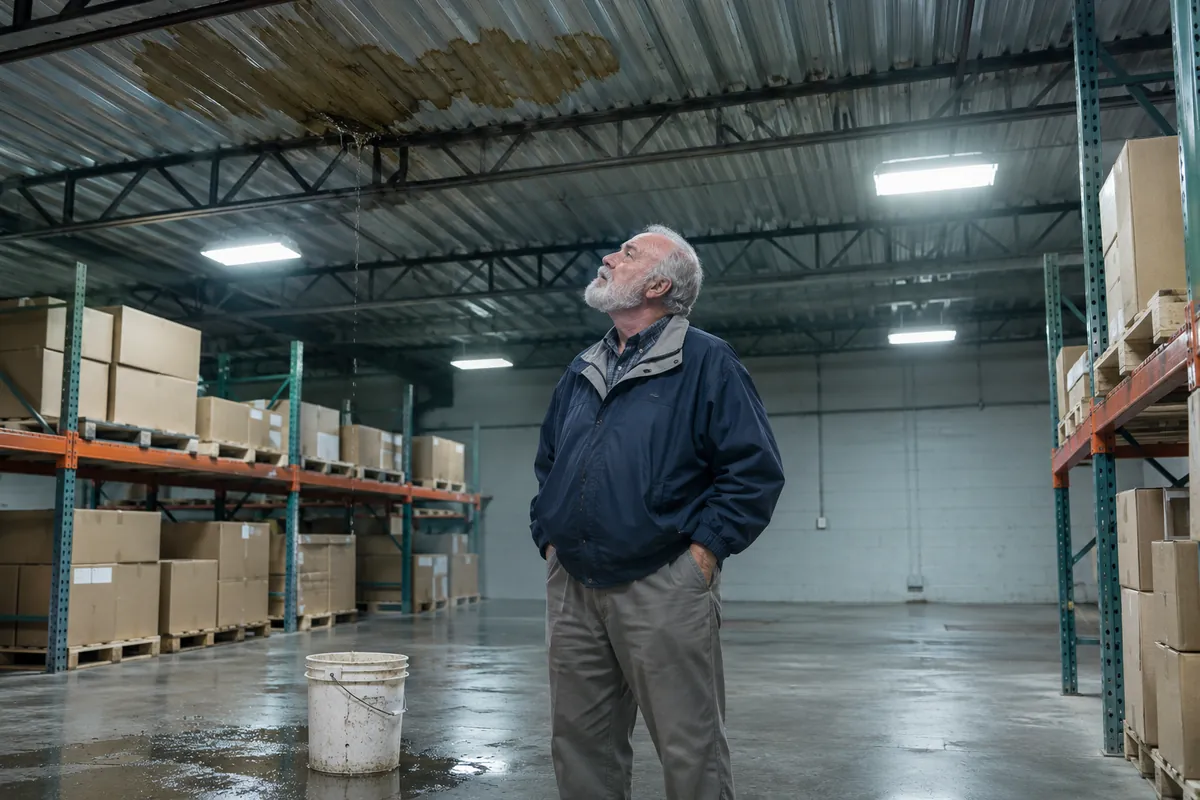
Drips that show up far from any fastener row get traced along the purlins and deck before any panel comes off.
Commercial roof leak repair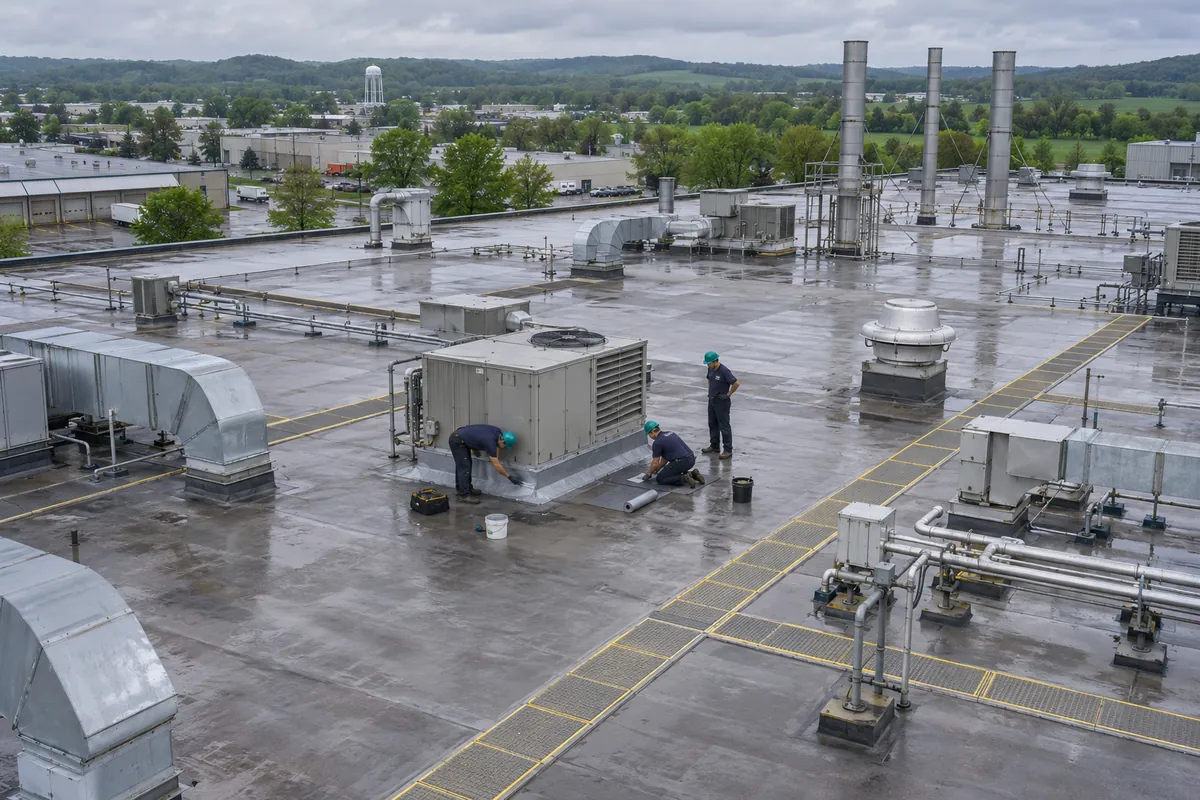
Metal plant roofs with exhaust fans and crane traffic get repairs scheduled around production and shift changes.
Industrial roof repairSnug the loose ones and replace any stripped screw with a larger diameter that bites fresh metal. Panels expand and contract every day, which works fasteners loose and widens holes, and dried washers let water run down the shank.
Missing screws along purlin lines get replaced too, and the rows near the ridge and eave get the closest look because they loosen first.
Patch them when the rust is limited to small areas of firm steel; replace them when holes run through large parts of the sheet.
Patching means wire-brushing to bright metal, priming, and setting a metal or fabric-reinforced patch. A replacement panel has to match the existing ribs, so we measure profile and gauge on site and check the purlins first.
Open or clean the lap, replace the sealant tape, and refasten it with new stitch screws. Where the upper panel can lift, the old tape comes out and new butyl goes in.
Where it stays fixed, the lap is cleaned and covered with a fabric-reinforced seam treatment. Ridge cap joints and closures on that line tend to fail together, so they get checked too.
Seams, hangers, and the joint where the gutter meets the panel ends. Long panel runs dump a lot of water at once, so small gutters overflow and spill behind the trim.
Repairs reseal splices and end caps, replace bent hangers, add downspouts, refasten trim, replace missing closures, and clear clogged outlets. Stains on wall panels under the eave point to a gutter backing up.
Metal work centers on fasteners, laps, and rust; membrane work centers on seams, flashing, and punctures in one continuous sheet.
Metal patches are metal or reinforced sealant over wire-brushed, primed steel, while membrane patches are matching sheet, welded or taped. Buildings with both roof types need both skill sets, especially where the two meet at a wall or eave.
Let us know whether the panels have exposed screws or standing seams, and where the drips land.
Leave a name and number and we will call about your roof.
Or call (364) 207-8996 now.