Fastener And Lap Repair
New screws and washers, retaped end laps, and resealed ridge caps where the drip log ties leaks to rain.
Commercial metal roof repair
As an Auburn commercial roof repair contractor, we sort true roof leaks from cold-morning condensation, then fix the laps, screws, or skylights behind the real ones.
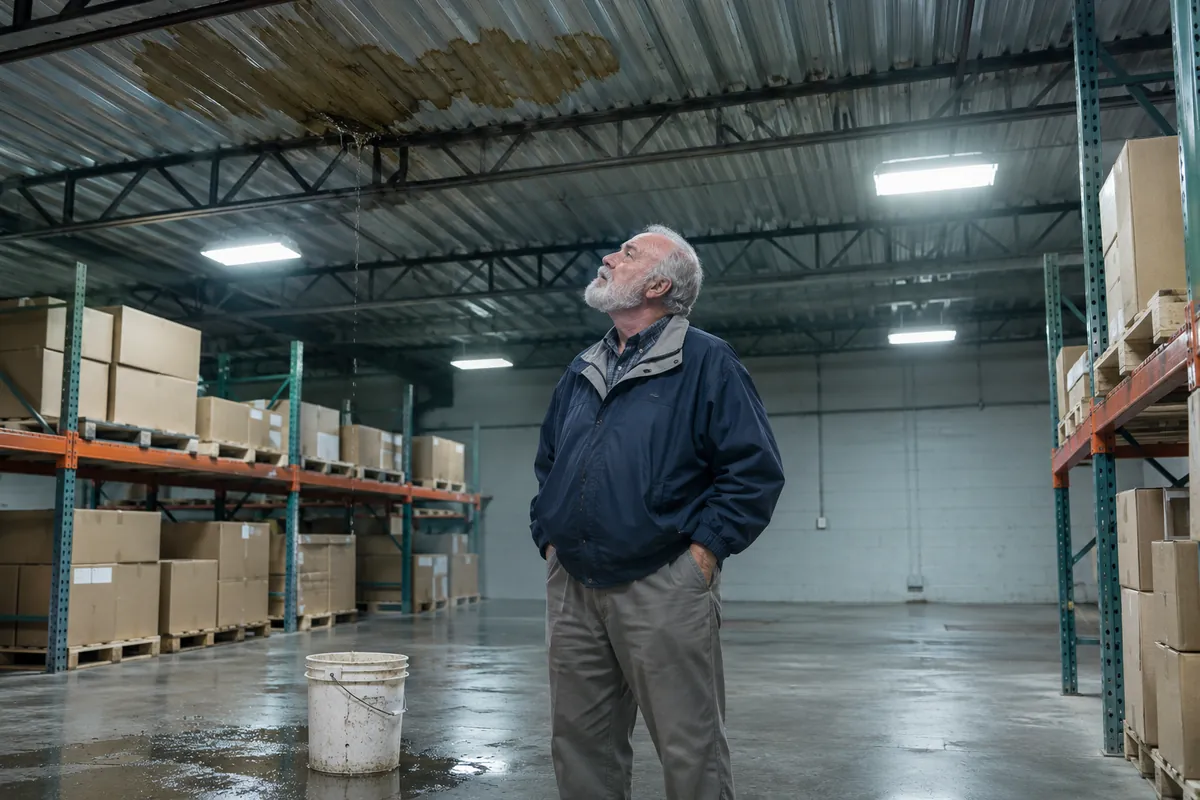
An Auburn commercial roof repair contractor hears one question often in winter: is it the roof, or is it sweat? Bare steel over open framing collects moisture on cold mornings, and it drips like a leak.
The pattern tells them apart. Leaks follow rain and line up with screws, laps, ridge caps, or skylights. Condensation follows temperature and indoor humidity and drips on dry days too.
Match the pattern to its likely cause before anyone opens the roof.
Water entering at a screw, end lap, or ridge cap above that spot.
We trace upslope, then replace fasteners or retape the lap.
Warm, moist inside air condensing on bare steel overnight.
We confirm the pattern and point you toward insulation, ventilation, or a vapor retarder.
Cracked skylight panels or failed closures where they lap the ribs.
The panel is replaced to match the ribs, and both laps are sealed.
Gutters backing up and spilling behind the eave trim.
Gutters are cleared, splices sealed, and downspouts added where the run is too long.
Fixing the right problem changes what you see inside.
What we fix once the drip pattern is clear.
New screws and washers, retaped end laps, and resealed ridge caps where the drip log ties leaks to rain.
Commercial metal roof repairVisual checks, water tests, and a floor-plan map of each drip when the source sits far from the stain.
Commercial roof leak repairSeams and flashing on a flat office or storefront roof attached to the metal shop.
Flat roof repairNote whether it is raining and how cold it is.
Unsure whether it is a leak or condensation? Send the address for a free estimate.
Get A Free EstimateFour steps that keep repairs pointed at real leaks.
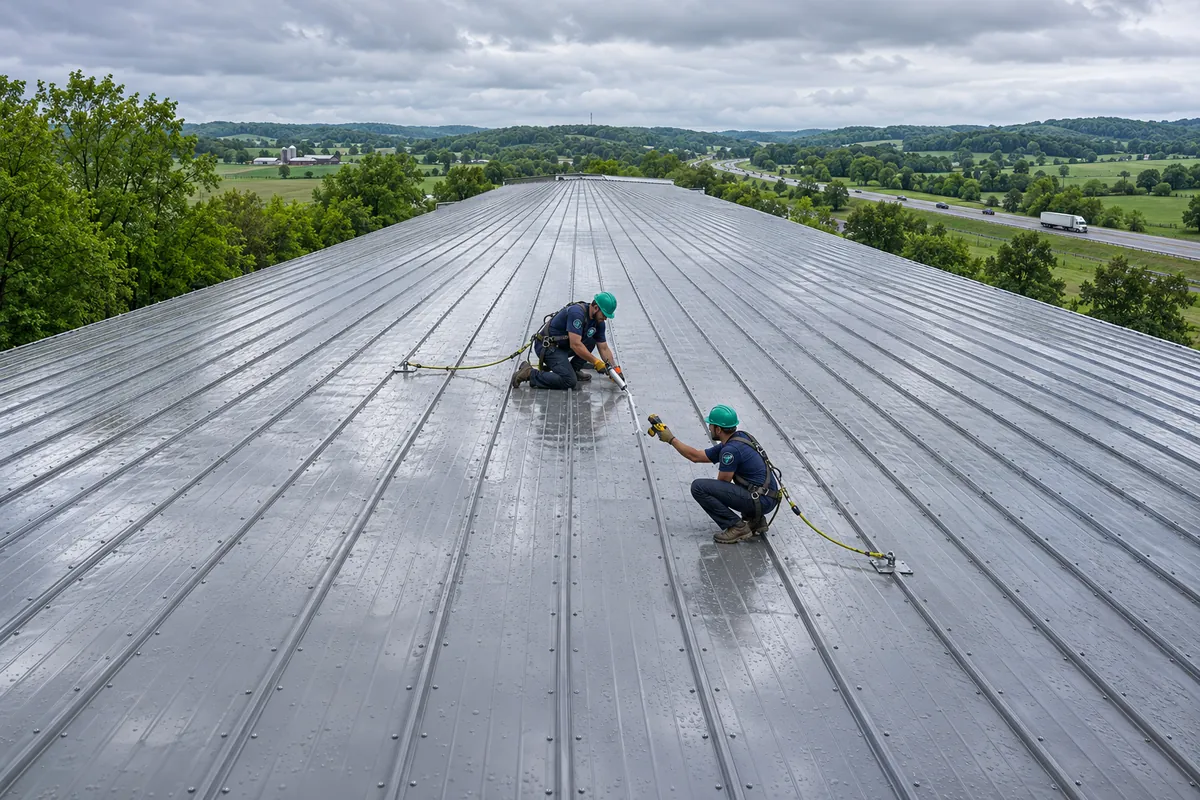
Walking the panels above each drip, we check screws, washers, end laps, ridge caps, and skylights, and look inside for bare steel and moisture on the underside.
Your notes on dates, rain, and temperatures get lined up against the drip spots, which separates rain-timed leaks from cold-morning condensation.
Real leak points get new fasteners, retaped laps, or replaced skylight panels, matched to the existing roof profile.
Where condensation is the cause, the report says so plainly and lists the building-side options to raise with an insulation or HVAC contractor.
We take repair calls in Auburn, Bowling Green, and seven other towns. Beyond them? Call us or send us a message.
Winter patches and dry-weather repairs for Allen County buildings.
Scottsville commercial roof repairSkylight and panel swaps on Butler County metal buildings.
Morgantown commercial roof repairCoping, parapet, and flashing repairs on older Barren County roofs.
Glasgow commercial roof repairGutters and wall flashing on Edmonson County buildings.
Brownsville commercial roof repairCondensation drips from many spots on cold mornings, while a leak drips from one spot during or after rain. Shop and farm buildings with bare steel over open framing are prone to it in winter.
Laps and fasteners fix leaks; condensation needs insulation, ventilation, or a vapor retarder. Rural Logan County buildings can be on Warren RECC lines, so confirm the provider before shutting off heaters.
The date, the time, the weather, and the spot. Note whether it was raining, how cold it was overnight, and whether heaters were running, and mark each drip on a simple floor plan. A week or two of notes usually shows whether the drips follow rain, which means a roof leak, or cold, or both.
Yes, and older metal buildings often do. A backed-out screw can leak in rain while the same roof sweats on cold mornings. Fixing the screw stops the rain drip; the morning drips stay until the building side is addressed.
No. Condensation forms on the underside of the steel when warm, moist inside air meets a cold roof, and fasteners have nothing to do with it. Insulation, ventilation, or a vapor retarder on the building side is the fix. New screws and washers stop water coming in from outside.
Unheated or lightly heated metal shops and farm buildings with bare steel over open framing, especially when equipment, livestock, or wet materials add moisture inside. Heated buildings with an insulated roof see it far less, though a torn vapor retarder can bring it back.
Send your drip notes and the property address, and we will check whether it is a leak, condensation, or both.
Leave a name and number and we will call about your roof.
Or call (364) 207-8996 now.