Exhaust Zone Rebuild
Replacing grease- or heat-damaged membrane around fans and stacks with a rated sheet, plus a containment box or walkway pad under the discharge.
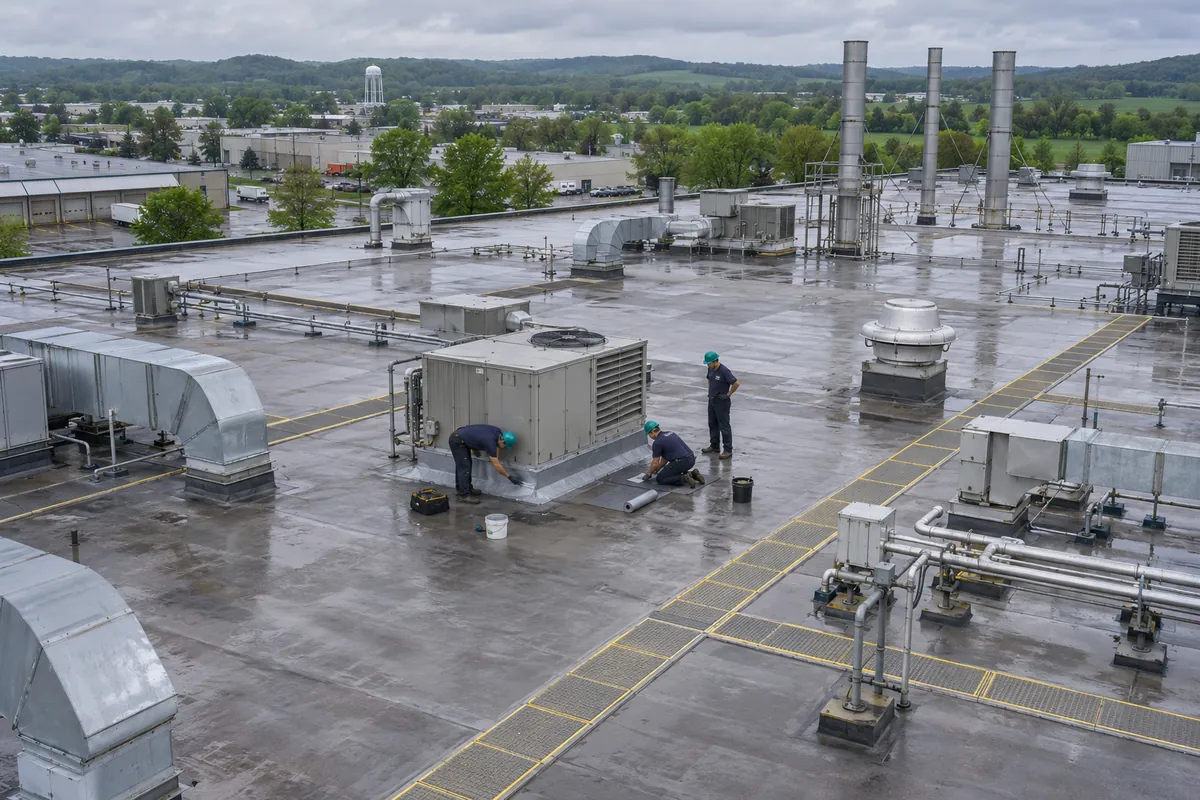
As a Bowling Green industrial roof repair contractor, we repair plant and warehouse roofs in small sections, around shutdowns, shift changes, and shipping schedules.
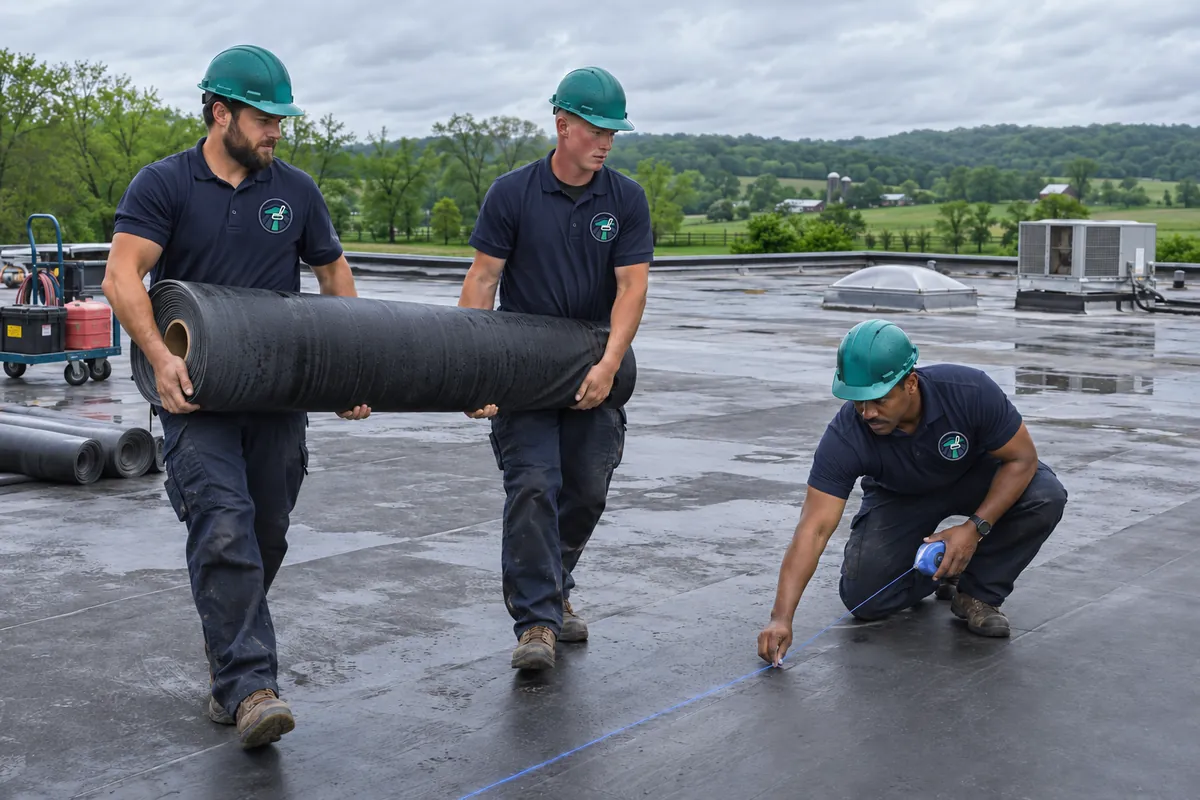
A Bowling Green industrial roof repair contractor gets the most from repairs on roofs where damage clusters around fans, routes, and drains while the rest of the field holds up.
Production adds wear that office and retail roofs rarely see.
Oils, grease, or solvents from exhaust settling on the sheet; EPDM reacts worst to oils.
We cut out the damaged sheet, replace it with membrane rated for that exposure, and add a containment box or sacrificial pad.
Heat from the discharge drying the membrane until it cracks, then opening seams next to the vent.
Cracked areas are replaced, and seams near the stack are rewelded or retaped and probed.
Foot traffic and carts crushing the insulation between the hatch, the units, and the ladders.
Crushed board and cover board are replaced, the sheet patched, and walkway pads welded or adhered along that path.
A cracked drain bowl, broken clamping bolts, a missing strainer, or a sump that flattened.
Bowls are replaced or retrofit, clamping rings reset, and the membrane reflashed into the drain.
Wet insulation holding heat after sunset, often fed by a slow puncture months old.
Readings are mapped on a roof plan and confirmed with core cuts before any repair is planned.
Plant roof repairs grouped by where the damage starts.
Replacing grease- or heat-damaged membrane around fans and stacks with a rated sheet, plus a containment box or walkway pad under the discharge.
Patching punctures and scuffs between the hatch and the units, replacing crushed insulation, and adding walkway pads so foot traffic stops wearing through.
New drain bowls or retrofit drains, reset clamping rings, replaced strainers, and overflow scupper sleeves reset to the right height.
Infrared, a meter grid, and core cuts to find wet insulation, then partial replacement where the survey says spot repair will hold.
A plant roof before and after the damage around equipment and routes is fixed.
Note the bay, the line, and the equipment under it.
Exhaust damage, worn routes, or ponding at drains? Send the address for a free estimate.
Get A Free EstimatePlant maintenance and the repair crew agree on the plan before anyone opens the roof.
Surveying the roof with plant maintenance, we note exhaust zones, service routes, and drains, and run infrared or a meter grid where wet insulation is suspected.
Which units and fans can go off, and when, gets set with plant staff, along with hot-work rules, access routes, and protection over open production areas.
Small roof areas are opened and closed the same shift, often during shift changes or weekend downtime, so makeup air and exhaust run when the plant needs them.
A daily check confirms each opened seam and flashing is closed, the roof is swept with a magnet for screws, and the walkway path is clear.
Most plants carry more than one roof system.
Office wings and dock canopies with single-ply or built-up roofs get seams, punctures, and flashing repaired.
Flat roof repair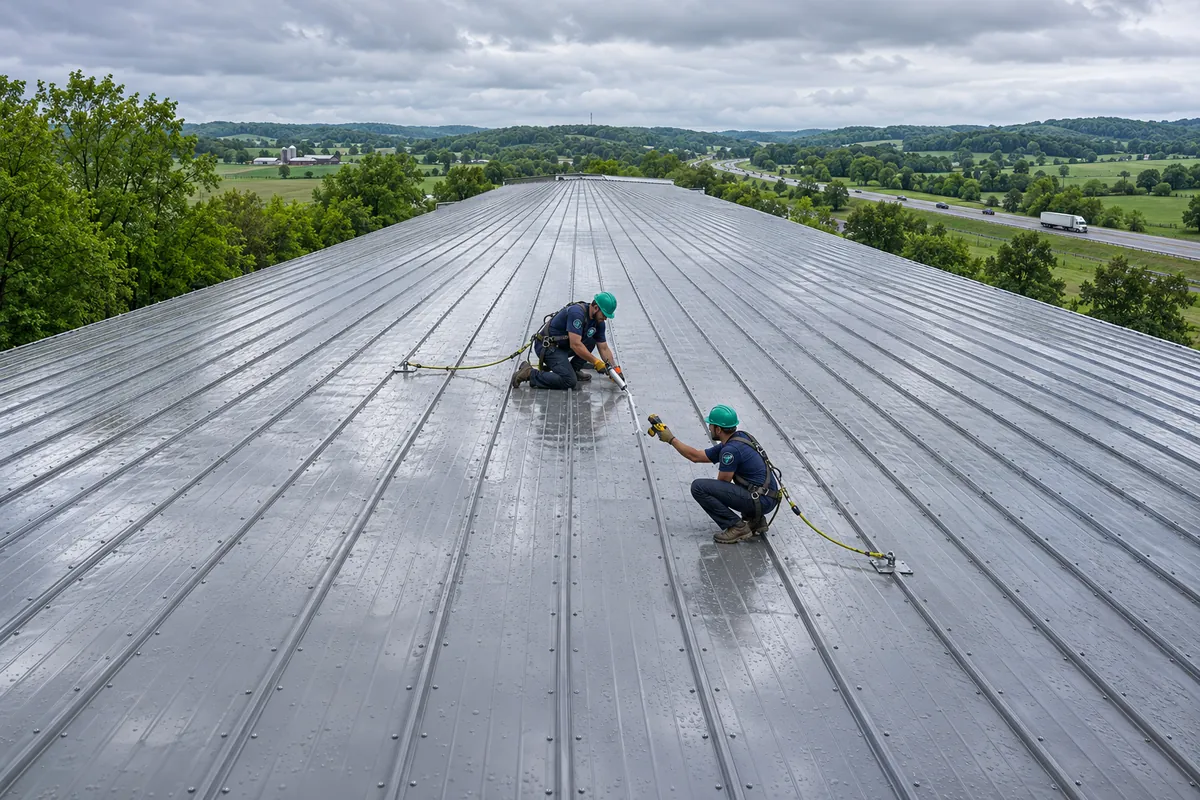
Metal plant buildings with exposed screws and end laps get fastener rows and laps resealed.
Commercial metal roof repair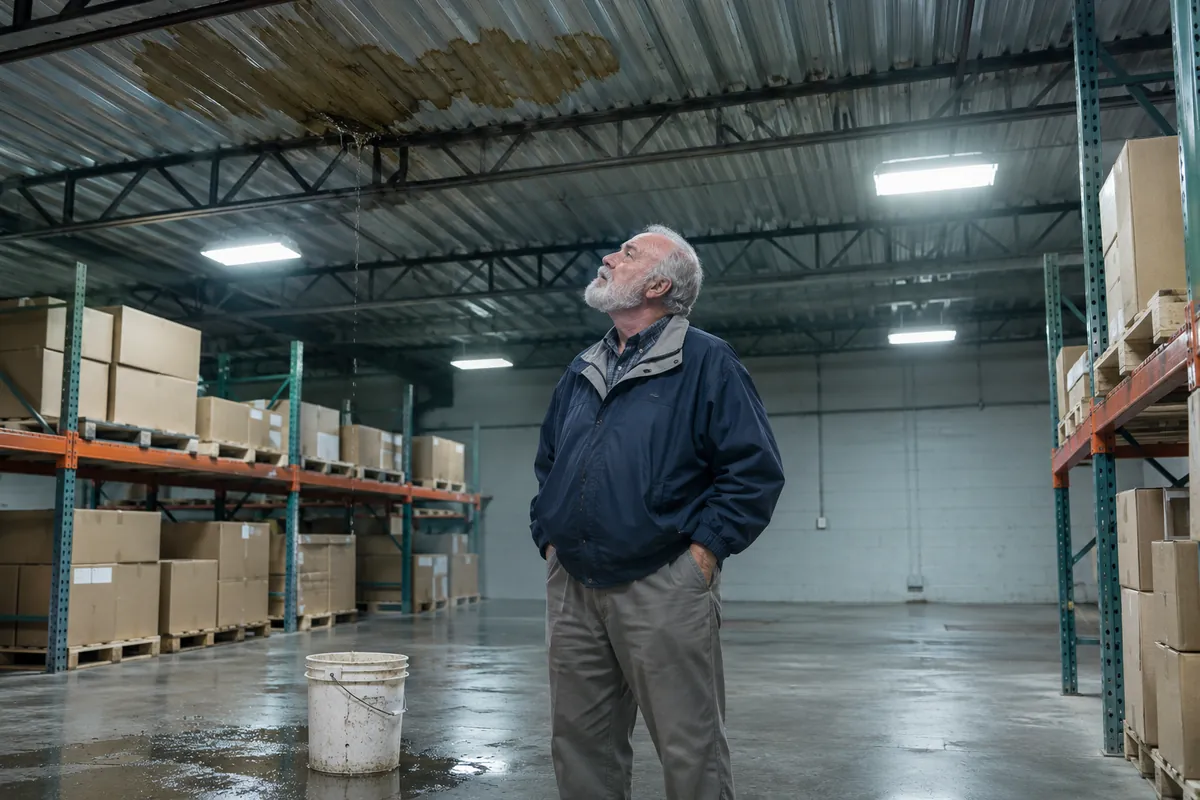
A drip over a line with no obvious source gets traced along the deck before production is disturbed again.
Commercial roof leak repairAround production. Repairs run in small areas, equipment shutdowns are coordinated with plant maintenance, and crane or hoist lifts are planned around shipping.
Before work starts there is a safety briefing, marked walkways from the roof hatch, and protection over open production areas, and a daily check confirms every opened seam or flashing is closed before the crew leaves.
It deposits oils, grease, solvents, or heat that soften, swell, or crack the sheet over time. EPDM is especially vulnerable to oils, and TPO and PVC react differently by product and chemical.
Look for gummy areas, discolored rings around fans, cracked surface near hot stacks, and seams opening near the vent. Repair removes the damaged sheet and replaces it with one rated for that exposure.
Patch the punctures and scuffs, replace crushed insulation and cover board under soft dips, then add walkway pads so the path stops wearing through. Wear gathers between the hatch and the units, around exhaust fans, and near ladders. Dropped screws leave slow leaks for months, so a magnet sweep after each service call helps.
Cracked bowls get replaced or fitted with a retrofit drain, the clamping ring is reset, and the membrane is reflashed into the drain. Overflow scuppers get new sleeves and flashing through the parapet.
Missing strainers, broken clamping bolts, and flattened sumps are fixed too, and scuppers that were set too high or sealed shut are reopened or reset.
With an infrared scan, a capacitance or impedance meter grid, and core cuts that confirm the readings. Wet insulation holds heat after sunset, so a camera picks up warm patches from the roof or the air.
Readings go on a roof plan, and the survey decides between spot repair, partial replacement, or full replacement while catching leaks that have yet to reach the ceiling.
Tell us about the production schedule and which units can shut down, and we will plan the visit.
Leave a name and number and we will call about your roof.
Or call (364) 207-8996 now.