Temporary Leak Control
Wet-patch mastic, tape, or a secured tarp over an active leak during cold or rainy weeks, logged so it gets replaced later.
Commercial roof leak repair
As a Scottsville commercial roof repair contractor, we slow active leaks with temporary patches in cold, wet weeks and make the permanent repair once the surface dries.
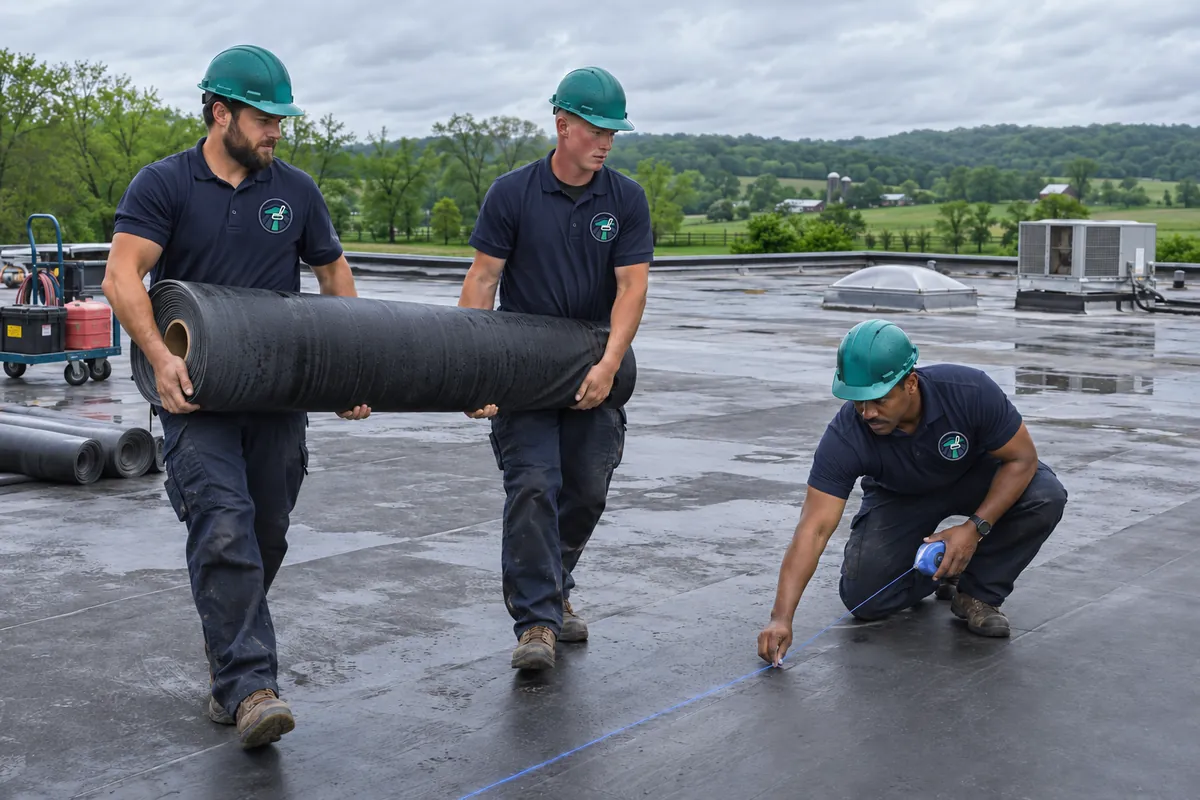
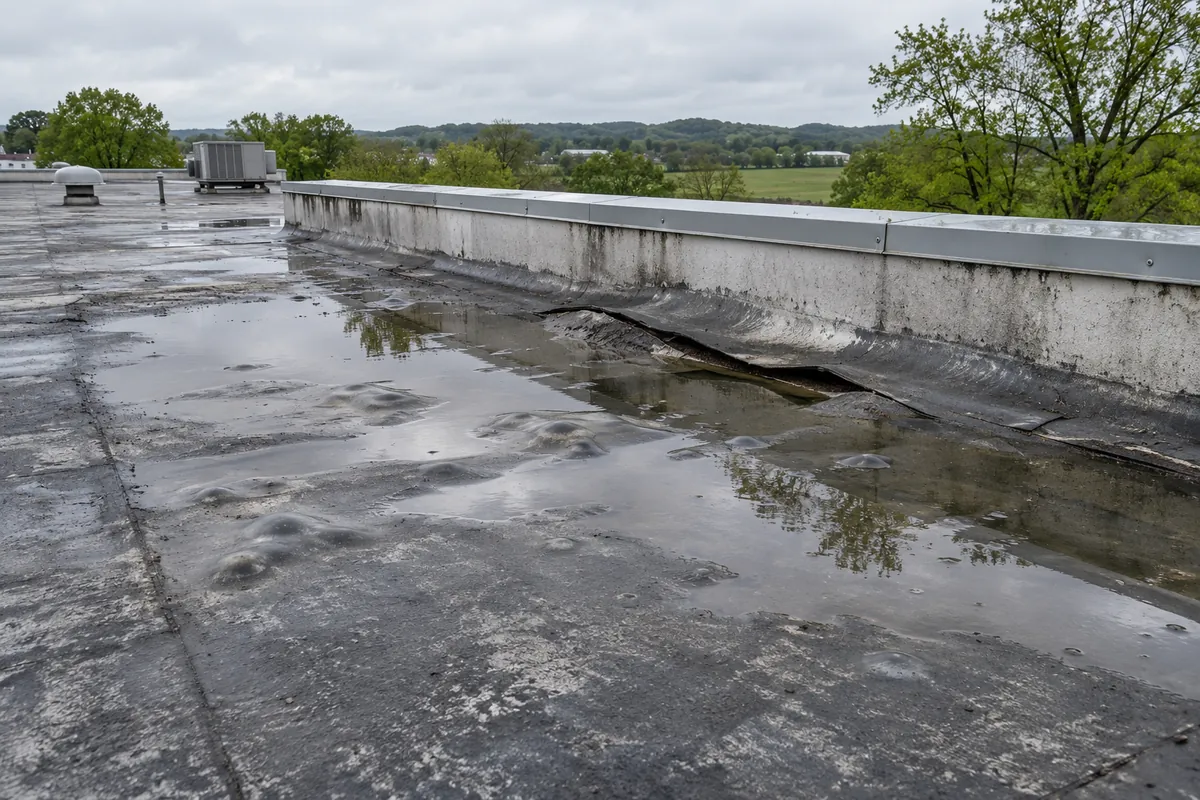
A Scottsville commercial roof repair contractor gets the most calls when rain and freezing nights line up. Many permanent repairs need a clean, dry surface: welded patches, primed tape, and new sealant all bond poorly to wet or frozen material.
So the job often runs in two visits. First, a temporary patch slows the water. Later, once the roof dries out, that patch comes off and the real repair goes on.
What winter does to small roof defects.
Ice forming overnight in a seam edge or metal lap and widening the gap.
We slow it with a temporary patch, then reweld or retape the lap when the surface is dry.
A clogged strainer holding water that freezes and stresses the flashing around it.
The strainer is cleared, the drain checked, and the flashing repaired once the ice is gone.
Leaves packed in the gutter backing water under the trim during heavy rain.
Gutters are cleared and resealed, and hangers or outlets are fixed so the run drains.
Mastic smeared over a wet seam last winter and left there as the permanent fix.
The old mastic comes off, the seam is cleaned, and a welded or primed patch goes on.
Two visits, two different results.
What we use in each season on Scottsville roofs.
Wet-patch mastic, tape, or a secured tarp over an active leak during cold or rainy weeks, logged so it gets replaced later.
Commercial roof leak repairWelded TPO patches, primed EPDM tape, and new flashing set on a cleaned, dry surface once the weather allows.
Flat roof repairWashers, screws, and end laps on exposed-fastener shop and farm buildings, work that goes ahead in most weather.
Commercial metal roof repairTell us where it drips and what the weather was.
Catch the water inside and call us. A temporary patch goes on once the roof is safe.
Call UsOld winter patches that need a proper fix? Send the address for a free estimate.
Get A Free EstimateSteps one and two come fast; steps three and four wait for dry weather.
Checking the roof as soon as it is safe to walk, we find the open lap, curb, or drain behind the leak and note what the weather allows that day.
Mastic, tape, or a secured tarp goes over the opening to slow the water, and the spot is photographed and marked so it is easy to find on the return visit.
On a dry stretch the temporary material comes off, the surface is cleaned and primed, and the permanent patch, tape, or flashing goes on.
Drains, strainers, and gutters get cleared during the second visit, so the roof heads into spring storms with water moving off it.
Scottsville plus eight more towns, Bowling Green among them, make up our repair area. Elsewhere? Call us or send us a message.
Skylight and panel swaps on Butler County metal buildings.
Morgantown commercial roof repairCoping, parapet, and flashing repairs on older Barren County roofs.
Glasgow commercial roof repairGutters and wall flashing on Edmonson County buildings.
Brownsville commercial roof repairMany buildings in and around Scottsville run on Tri-County Electric, which lists Allen County in its territory and keeps a district office in town.
Its territory crosses into Tennessee, so confirm the provider on the bill before shutting off heaters or fans. Exposed-fastener shop roofs leak first at screws, end laps, and gutter seams, and long eave runs overload small gutters.
Some repairs can, and some should wait. Fastener and washer work on metal roofs goes ahead in most conditions. Welded patches, primed tape, and fresh sealant need a clean, dry surface, so in freezing or wet weather a temporary patch holds until the roof dries.
Only until conditions allow the real repair. Mastic and tape on a damp surface lose their grip as the roof moves and the weather cycles, and they trap dirt that a welded patch cannot bond to later. Plan on replacing a temporary patch at the next dry stretch rather than leaving it in place.
The National Weather Service puts nearby Bowling Green's 1991 to 2020 average near 50 inches of rain and melted snow a year, with about 8.5 inches of snow and a January average near 37 degrees.
That mix of steady rain and freeze-thaw swings is why seams, laps, and drains get the closest look before winter.
Clear leaves from gutters and outlets, look for screws that have backed out near the ridge and eave, and check end laps and gutter splices for gaps. Inside, note any drips during the first hard rain. Those few checks catch most of what turns into a winter leak.
Tell us whether the leak is active now, and we will plan a temporary patch or the permanent repair.
Leave a name and number and we will call about your roof.
Or call (364) 207-8996 now.